Washing Machine is Leaking
The first thing to do is identify where the leak is coming from. While a washer can leak from a number of places, the vast majority will be from the same few places. This image shows the main leaks points on a washing machine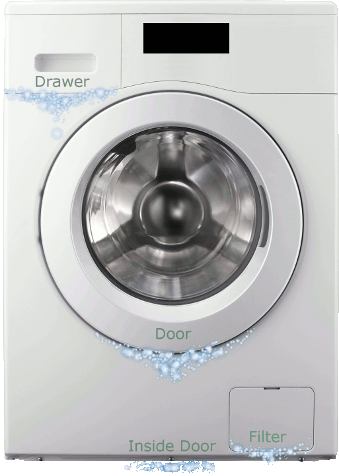
Locating the leak
If the leak was big, it is generally easy to find where the source is coming from as you will normally be able to see a trail of water and soap as in the image above. If the leak is only small, place some newspaper under the washer. Check after each wash for any signs of water on the paper.Once you have found the area of the leak, make sure it is not something above that is leaking and dripping down. The easiest way to do this is to start from the initial wet part and feel upwards and around from there for a trail. If the leak is soapy water you may be able to still see white streaks of dried soaps originating from the leak.
Example image of newspaper to identify source of leak
Leaking from the Soap Drawer
The soap drawer, where you put soap powder and conditioner, has no seal and relies on a slope and gravity to prevent any leaks. This can start to leak in a couple of situations.Blockage
Usually caused by putting too much powder in the drawer which means it does not dissolve and instead forms a gungy mass. This builds up over time restricting the speed at which water can escape. Once this is less than the speed it is filling, the excess will overflow over the front. The answer to this is simply to remove the blockage. First manually remove any excess powder that is visible, then with the washer closed, pour boiling water into the soap drawer. Repeat this until the water runs easily, then put the washer on a quick wash to clear the system.Alternatively you can remove the drawer from the washer and clean in the sink or with a brush. The drawer can normally be removed by either a release catch at the back or by gently lifting the front of the drawer once it has been pulled out.
Example image of a blocked drawer
Water Pressure Too High
The second reason for this when the water pressure is too high. In this case the water is coming into the drawer faster than it can drain out. If you have a tap on the pipes where the hoses connect to, you can try to turn this half off to reduce the pressure.Example image of tap locations
Leaking from the Door Seal
The door seal stops water getting out through the hole where the clothes are put in once the door is closed. General wear or objects left in clothes can create tears in the seal. This type of leak will normally run down the back of the front panel and show itself on the floor (shown as inside door in the image above). You can generally find these holes by pressing on the seal to expand it and visually inspecting it. If so, you will need to replace the seal. See here for details.The leak may also run down the front of the panel (shown as inside door in the image above), but in this case you should first check there is nothing obstructing the seal. This could be a loose thread or soap residue. IF there is something between the glass and the rubber, this can create a channel for the water to escape. Try wiping the glass and seal with a wet cloth. This might restore the seal and prevent you having to buy a new one.